



TesterMAX Payouts Explained: How and When You Get Paid
TesterMAX payouts explained: PayPal cash vs gift cards, withdrawal minimums, and what actually delays payment.
Most people judge a rewards app on what tasks pay. The more useful question is what happens afterwards — because a balance you can't withdraw is worth nothing regardless of how it was earned.
Here's how money leaves TesterMAX, how long it takes, and what actually delays it.
The two ways out
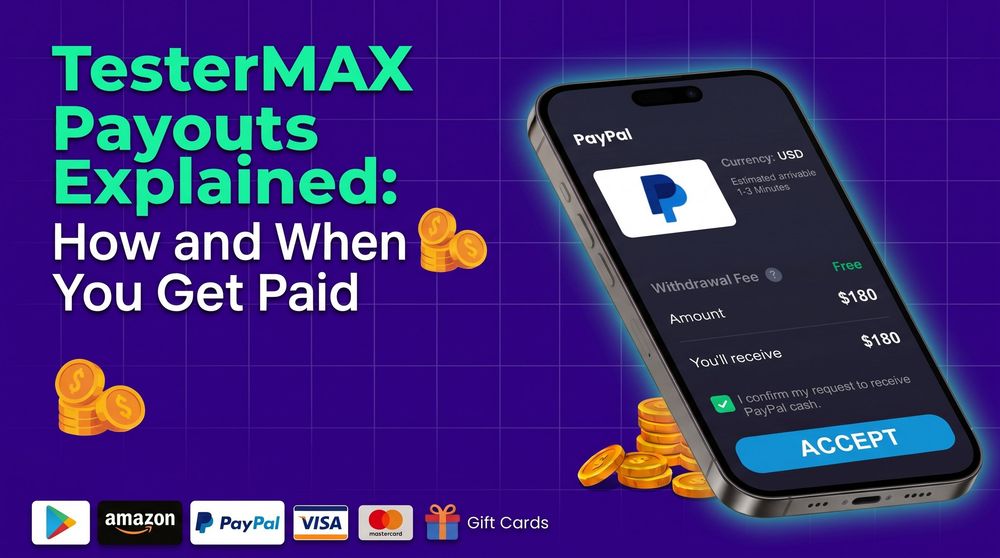
Cash to PayPal. The standard route, with nothing deducted at the platform's end. What you earned is what arrives.
Gift cards. A wide catalogue: a free amazon gift card, free apple gift cards, free google play gift card, free steam gift card, free xbox gift cards, free playstation gift cards, free paypal gift cards, plus Netflix, Spotify, Starbucks, Target, Walmart, DoorDash, Uber Eats and Roblox. You can earn visa gift card online credit and spend it anywhere, or take a store-specific card if you shop there regularly.
Digital codes are generally issued immediately. Cash transfers take slightly longer but still clear quickly compared with most of the category.
Which is worth more
Genuinely a decision worth making rather than defaulting.
Take the card when you were going to spend at that retailer anyway. Credit you'd have bought is worth its full face value, and it usually arrives faster.
Take the cash when you weren't. A card for a shop you rarely visit is worth less to you than its number suggests, and store credit doesn't convert back.
Visa and PayPal sit in between — flexible enough to spend anywhere, without being locked to one retailer.
The three numbers that matter
The withdrawal minimum. The single most important figure on any rewards platform. A low floor means a first payout in days; a high one can leave a balance sitting for weeks regardless of how fast the platform processes.
Processing time. How long between requesting and receiving. Quick here rather than the multi-day review some platforms run.
The task-to-payout rate. Published per offer before you accept, so you can see what a task is worth without completing it first. That transparency is unusual in this category and worth using.